
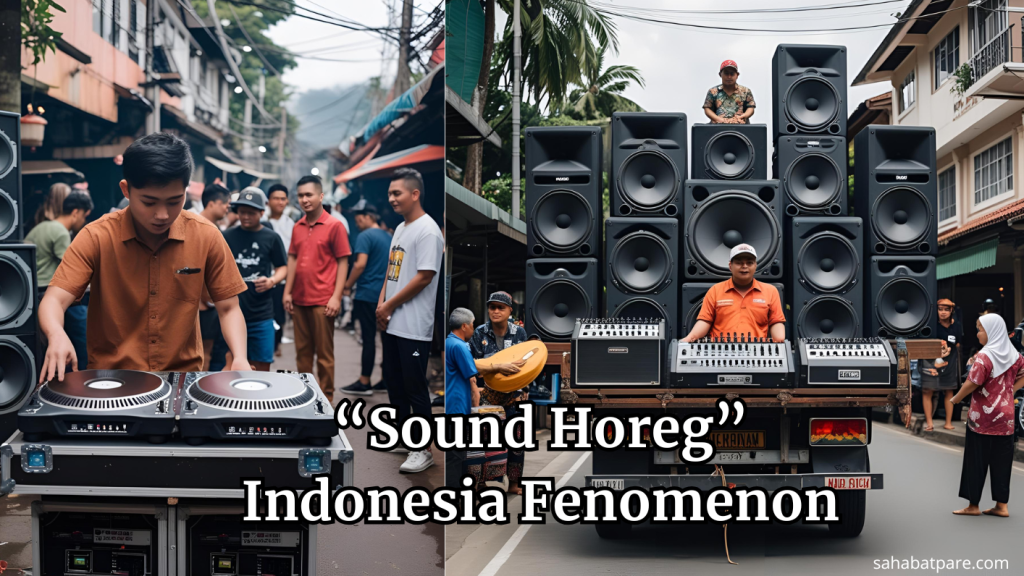
The Rise of the “Sound Horeg” Phenomenon in Indonesia
In the past decade, Indonesia has experienced the emergence of Sound Horeg, a musical trend that grew from local communities and gradually spread to wider audiences. Unlike mainstream pop or dangdut koplo performances on big stages, Sound Horeg often takes place in more informal settings—such as village parties, wedding celebrations, and even roadside gatherings. The availability of affordable sound equipment and remix software has made it possible for young people to create their own music without relying on professional studios. This democratization of music production explains why Sound Horeg has become such a widespread phenomenon.
- Origins and Characteristics
The term horeg is a colloquial expression that means something noisy, vibrant, and slightly chaotic. True to its name, Sound Horeg is marked by heavy bass, distorted electronic sounds, and a high-tempo rhythm that energizes its audience. DJs usually remix popular songs, from dangdut and koplo to pop and EDM, then add repetitive beats to intensify the listening experience. The raw, unpolished nature of the music is what sets it apart from mainstream genres. - Positive Impacts
Sound Horeg has brought several positive impacts to Indonesian society. First, it has become a symbol of grassroots creativity, showing that art and music can flourish without formal training or expensive production. Second, it plays an important role in strengthening social bonds; in many communities, Sound Horeg is a key part of local celebrations, bringing people together across different age groups. Third, digital platforms such as YouTube and TikTok have allowed local DJs to gain popularity and economic opportunities, as their mixes often go viral and attract sponsorships or performance invitations. - Negative Impacts
On the other hand, Sound Horeg is not without controversy. Some critics complain about the excessive noise and sound distortion, which can disturb nearby residents, especially during late-night events. There are also concerns about public order, as certain gatherings associated with Sound Horeg have occasionally led to traffic congestion or conflicts. In addition, cultural observers argue that while it promotes creativity, the music’s repetitive and chaotic style may lower artistic quality compared to more established musical traditions. As a result, local authorities in some regions have attempted to regulate its use.
The Sound Horeg phenomenon reflects how culture evolves at the grassroots level, fueled by technology, community, and social media. While it may divide opinions, it undeniably represents the dynamic spirit of Indonesia’s youth, who continue to shape their own musical identity outside of mainstream conventions. With both positive and negative impacts, Sound Horeg stands as a reminder that popular culture is not only about entertainment, but also about the voice and creativity of the people.