
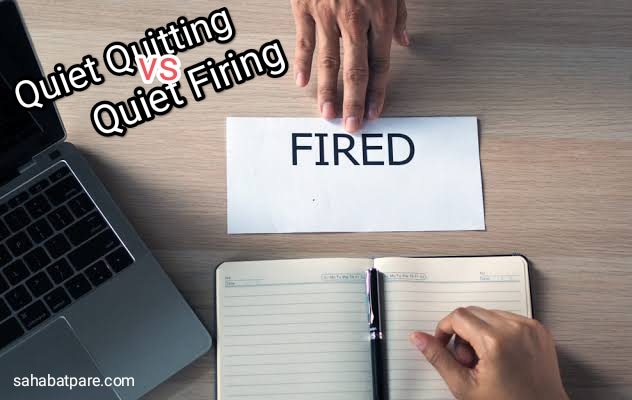
Quiet Quitting vs Quiet Firing

There have been several recent news and opinion articles on the topic of “quiet quitting” as of late. This is the concept where an employee merely meets the very basics of his or her job description at work. According to Gallup, the global analytics and advice firm, “quiet quitters make up at least 50% of the U.S. workforce – probably more.” Gallup explains that the overall decline in work engagement has to do with the “clarity of expectations, opportunities to learn and grow, feeling cared about, and a connection to the organization’s mission or purpose.” These issues are more prevalent in Millennial and Generation Z workers, which Gallop says is… Read More

Continue Reading
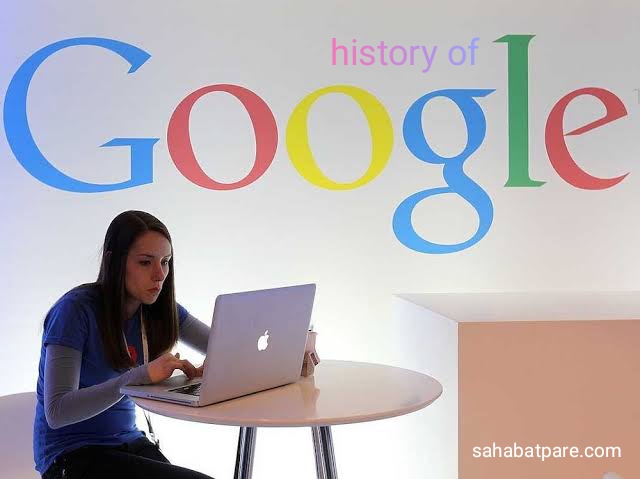
Story of Google

Search engines or internet portals have been around since the early days of the internet. But it was Google, a relative latecomer, that would go on to become the premier destination for finding just about anything on the World Wide Web. The very popular search engine called Google was invented by computer scientists Larry Page and Sergey Brin. The site was named after a googol—the name for the number 1 followed by 100 zeros—found in the book Mathematics and the Imagination by Edward Kasner and James Newman. To the site’s founders, the name represents the immense amount of information that a search engine has to sift through. In 1995, Page… Read More

Continue Reading

Slow Living

Technology has made our world connected and fast-paced as ever, impacting our quality and speed of life. Conversations, information, and news travels faster than ever before. People are expected to be connected 24 hours a day, seven days a week. Working after leaving the office has become the norm. “Hustle culture” has caused many people to experience extreme points of burnout. Our fast-paced lifestyles take their toll on our mind, body, and spirit. Everything, from our health and diet to our relationships, families, communities, and schools is suffering from busyness and it’s also hurting our ability to think, link, innovate, create work, be productive, and be creative. But the faster… Read More

Continue Reading

How to say “beautiful” in other words

Whenever finding a beautiful person, place or thing, the only word comes into the mind is beautiful. Isn’t it boring to use beautiful always? English has so many ways to say the same thing. This rich mix of different tongues and the evolution of English (much thanks to our friend Shakespeare) has made English the beautiful mixture that it is today. A native language probably has an elaborate selection of words to describe beauty and attraction, but you probably only know a few in English. By creating a rich vocabulary, you enrich your English and sound much more natural. Here, we can use some stylish words to saya beautiful: Adorable… Read More

Continue Reading

Mukbang

For years, people have been heading to YouTube to spend upwards of 60 minutes at a time to watch strangers consume 4,000 or more calories in one sitting. Not only that, many of these viewers are paying to indulge in this binge-viewing, binge-eating privilege. It’s called mukbang. Mukbang is pronounced “mook-bong”, and it translates to “eating broadcast” in South Korea, where professional mukbangers can make up to $10,000 a month — not including sponsorships from food and drink brands. Simon Stawski, a Canadian blogger who co-founded Eat Your Kimchi, moved to South Korea in 2008. Mukbanging first came onto his radar in 2014, but it wasn’t until 2015 that it… Read More

Continue Reading